

Planning a tribute in a short time
When a service is close, it helps to keep decisions simple and focused. This guide gives families a clear checklist for gathering photos, choosing music and preparing a tribute video without added pressure.
Start with the essentials first
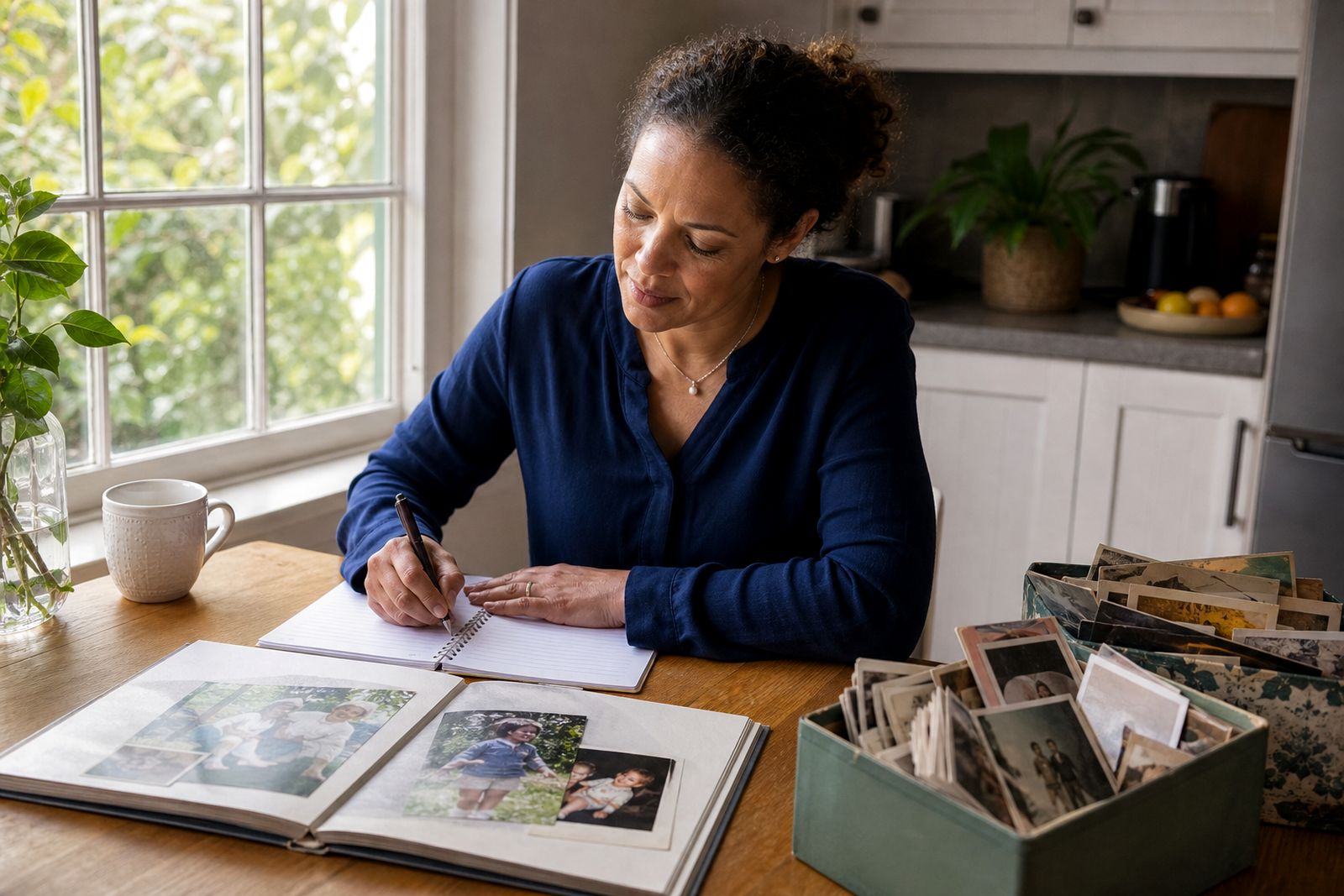
In the first day or two, the most helpful approach is to decide what the tribute needs to do. For many families, that means creating something gentle and personal to play at a funeral, memorial service or celebration of life. It does not need to cover every chapter of a person’s life. A smaller, meaningful selection often feels more manageable and more moving.
Choose one family member or close friend to gather material and send decisions through. This keeps communication clear and avoids people working on different versions at the same time. If several relatives want to contribute, ask them to send everything to that one person first.
- Confirm the type of service and where the tribute will be shown.
- Decide who will collect photos, clips and written details.
- Choose whether the video should feel quiet and reflective, or more celebratory.
- Make a short list of must-have photos before looking for extras.
- Check with the venue about screen, sound and USB playback.
Gather photos and clips without overcomplicating it
Families often feel they must search every album and every phone. In a short time frame, that usually creates more stress than value. Start with the clearest and most meaningful images you already have. A good tribute can be made from a modest group of photos if they tell a heartfelt story.
If you have printed photos, set aside the ones that matter most and separate them from duplicates. If you have pictures on different phones, ask each person to send only their best few rather than entire galleries. Home video clips can be lovely, but only include them if they are easy to find and simple to share. A tribute does not become more personal just because it has more files in it.
- Look for family photos from different life stages.
- Include a few natural moments, not only formal portraits.
- Choose clear images where the face is visible.
- Set aside damaged printed photos that may need restoration.
- Ask relatives to label unfamiliar people or places where possible.
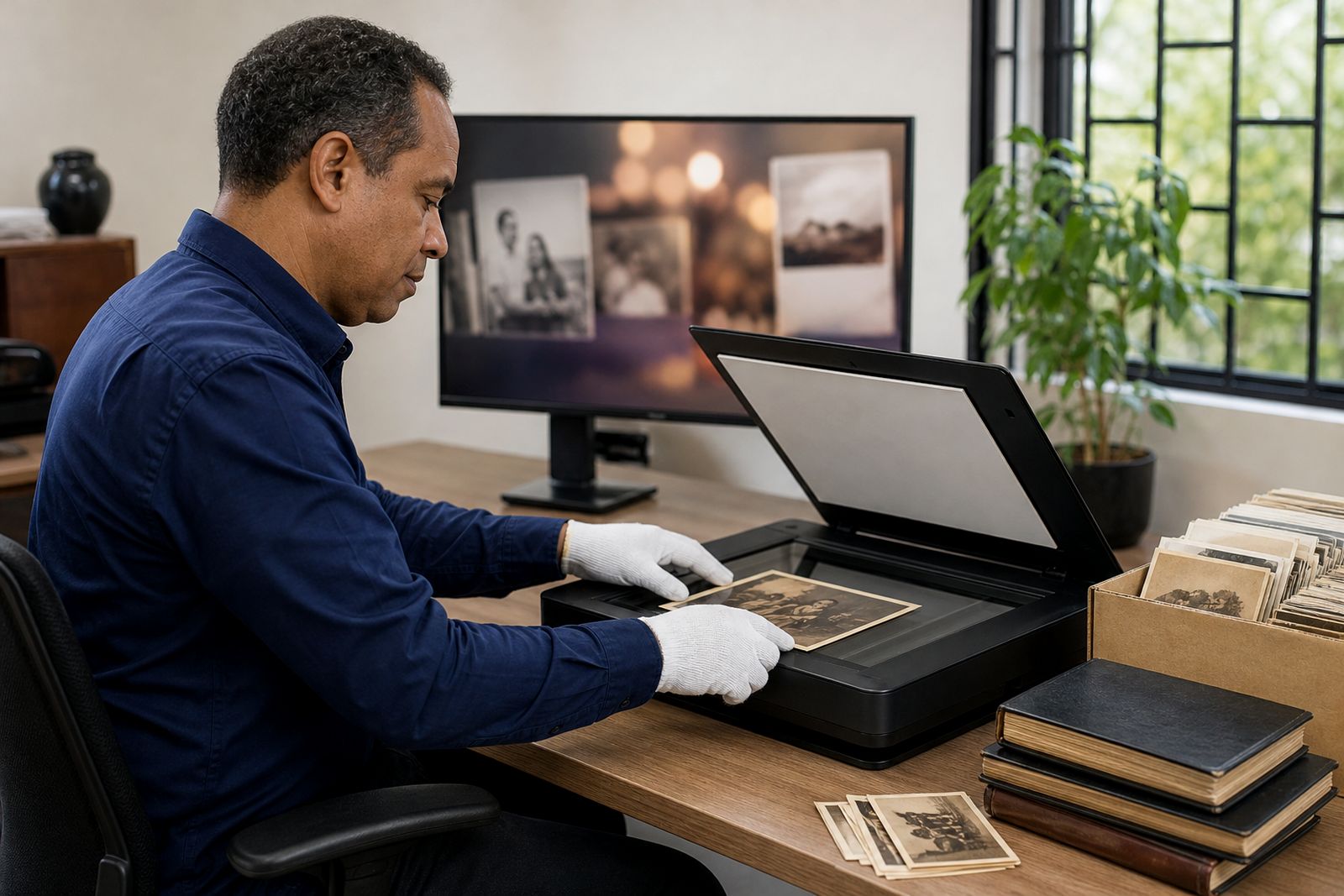
If you are near Durbanville you may drop off printed photos in person. Families elsewhere in South Africa can send digital files online. If some printed photos are fragile or stuck in albums, mention that early so the best scanning approach can be planned.
Choose the story, not every memory
When time is short, structure helps. Rather than trying to include everything, think of the tribute as a simple story of a life. You might begin with childhood, move through family life and friendships, then close with recent years and a final message. Another approach is to group photos by roles: parent, grandparent, sibling, friend, colleague, community member.
This stage is also where families can decide whether they want names, dates or short captions. Gentle titles can help viewers follow the tribute, especially if relatives from different sides of the family are attending. Keep wording brief and easy to read. Long paragraphs are often difficult to absorb during an emotional service.
If there are sensitive family situations, it is better to decide early which images to include and which to leave out. A respectful tribute does not need to solve old disagreements. It just needs to honour the person with care.
Pick music and words that feel true
Music carries a great deal of feeling, so it helps to choose pieces that suit the person rather than what feels expected. Some families prefer something soft and reflective. Others choose music with warmth, faith, or a sense of gratitude. If there was a song or style the person loved, that can guide the mood. Where music licensing matters, it is important to use properly licensed options for the tribute.
Words can be even simpler than families expect. A title at the beginning, a few lines during the slideshow and a closing message are often enough. If someone wants to write a full poem or letter, it may be better read aloud at the service rather than placed on screen where people only have a few seconds to take it in.
- Choose music that matches the tone of the service.
- Keep on-screen wording short and readable.
- Check the spelling of names and places carefully.
- Use one closing line if the family feels unsure what to say.
- Avoid trying to fit too many messages into one tribute.
Prepare for the service day
A beautiful tribute can still become stressful on the day if playback has not been checked. Ask the venue or funeral organiser what equipment will be used and who will handle the file. Some halls have their own sound setup, while smaller venues may rely on a TV or projector. During load-shedding periods or in areas where power interruptions are a concern, it helps to ask what backup arrangements are in place.
It is wise to have more than one copy of the tribute available. A digital file for the venue and a USB keepsake for the family can make the day easier. If family members will travel from other parts of South Africa, you may also want a version that can be shared privately afterwards.
- Confirm what file format the venue can play.
- Check whether the sound will come through speakers in the room.
- Nominate one person to test the tribute before guests arrive.
- Bring a backup copy if possible.
- Make sure the person operating playback knows when the tribute should begin.
These small checks can prevent last minute panic and help the service flow more gently.
Know what support to ask for
When families are grieving, practical help matters. A tribute service can assist with scanning printed photos, restoring damaged images, arranging photos and home video clips, adding gentle titles and preparing the final file and USB keepsake. That can remove a large task from relatives who are already dealing with funeral arrangements and visitors.
At the same time, it helps to know what falls outside the scope. Tribute preparation is separate from arranging the funeral itself. It also does not include filming the service live or providing grief counselling. Keeping these boundaries clear makes it easier to ask for the right kind of help at the right time.
If you are unsure where to start, use the enquiry form on the contact page and explain what material you have so far. Even a small set of photos and a few notes can be enough to begin. You do not need everything perfectly sorted before reaching out, and that often comes as a relief.
What our Memorial Tribute Videos customers say
Verified Google reviews
Questions we get asked
What if we only have a small number of photos?
A tribute can still feel deeply personal with a smaller collection. Clear, meaningful photos chosen with care often work better than a very large set gathered in a rush.
Can we use printed photos from albums?
Yes. Printed photos can be scanned, and selected images can be gently restored if they are faded, marked or worn. If they are delicate or fixed into an album, mention that when you enquire.
Do you arrange funerals or film the service?
No. The focus is on creating memorial tribute videos and photo slideshows. Funeral arrangements, live filming and grief counselling are not part of the service.
Also worth a look



Tell us about the job
Send sizes, materials and where you are through our contact form, and we will come back with the practical options.
Open the contact form